
What’s the difference between hand lettering and calligraphy? This is one of the most common beginner questions that we’re asked as calligraphy teachers.
The difference between hand lettering and calligraphy is the process, not the end result. Both art forms can produce similar-looking lettering, but they use different fundamentals and tools to get there.
Hand lettering is the art of drawing letters instead of writing as continuous strokes or letterforms. Calligraphy is the art of writing letters in their traditional letterforms using the basic calligraphy strokes. Both artforms embrace the art of beautiful writing, but with different fundamentals and writing tools.
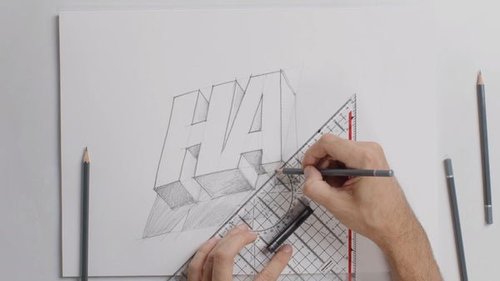
Hand lettering is the process of drawing letters. Artists draw letter shapes as outlines, then leave them hollow (think bubble letters) or fill them in to create solid letterforms.
Hand lettering can be done with any writing utensil, including:
Hand lettering typically begins with a skeleton sketch of the letter shape, which is then built out with additional details.
Takeaway: Hand letterers create words through drawing letters.

Calligraphy letters are written using a set of fundamentals shapes called the basic strokes. The strokes taper between thick and thin lines, which creates that quintessential calligraphy style. This contrast is achieved by writing with a pressure-sensitive writing utensil, such as a:
Even a standard Crayola marker can write calligraphy (tutorial here).
When we do calligraphy, we start by choosing a pressure-sensitive pen and then adding pressure when the pen moves down the page towards us. These parts of the letters are called the downstrokes, which we explain in greater detail here.
Takeaway: Calligraphers write letters using traditional letterforms and a pressure-sensitive writing utensil to create contrast between thick and thin strokes.

Cursive writing is a penmanship style in which letters and words are connected, prioritizing speed over decorative contrast. It’s often grouped with calligraphy and hand lettering, but key differences include:
Takeaway: Cursive is a fluid penmanship style whose goal is speed and consistency, not artistic expression.

Faux calligraphy is a hybrid of hand lettering and calligraphy. Faux calligraphy mimics the thick and thin stroke contrast of brush pen or pointed pen calligraphy, but is drawn with a monoline writing utensil instead. The thick downstrokes of calligraphy are recreated in faux calligraphy by drawing a second parallel line next to each downstroke and filling in the space between them.
Faux calligraphy can be done with any monoline writing utensil:
Takeaway: Faux calligraphy is a hybrid lettering style where hand lettering is used to create the look of calligraphy.

Understanding the difference between hand lettering and calligraphy is easier with examples. The four styles below show how these art forms look in practice, across a range of approaches from traditional Copperplate to modern brush lettering.
This is just an overview: there are countless different styles of hand lettering and calligraphy. See more examples in our style guide.
Hand lettering can take any form. Examples vary widely in style because the technique can be applied to any style, technique and tool.
We would like to highlight the work of our friend Stefan Kunz. He’s a talented hand lettering artist who shared the below images with Loveleigh Loops readers in this tutorial.
Faux calligraphy can look like normal calligraphy or it can stand alone as its own distinctive style. The examples below include both of these approaches.


Free worksheets: Learn faux calligraphy with our free course.
Traditional calligraphy is an umbrella term that most often refers to the popular Copperplate style. It’s sometimes also called pointed pen calligraphy or dip pen calligraphy. Additional styles of traditional calligraphy include Spencerian and Blackletter.


Free worksheets: Learn traditional calligraphy with our free basic strokes guide.
Brush calligraphy (AKA brush lettering) is a popular form of modern calligraphy. A pressure-senstive brush pen is used to create thin upstrokes and thick downstrokes, offering a modern twist on this centuries-old artform.


Free worksheets: Learn brush lettering with our free alphabet printable.
Calligraphy and hand lettering are different but equally worthy and beautiful artforms.
Do you love calligraphy and lettering as much as we do? We would love to give you instant access to all of our teaching materials in our membership Calligraphy Together. Hundreds of lettering enthusiasts (both new and seasoned!) gather in our community to take courses, practice together on live calls and share their work.
You might also like:



One Response
The point about process over end result really clarifies things—I’d always assumed calligraphy was just fancier hand lettering, but understanding that hand lettering is drawn while calligraphy is written with continuous strokes changes how I practice. Thanks for the free worksheets too!